












Gate motor battery guide: how long they last and loadshedding

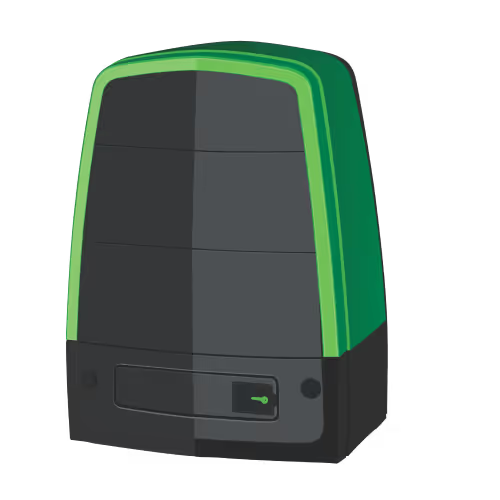
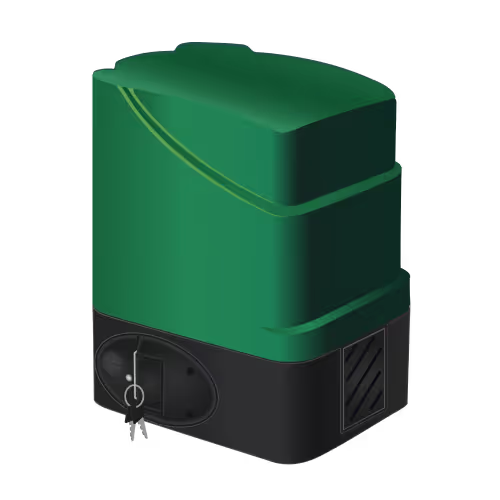
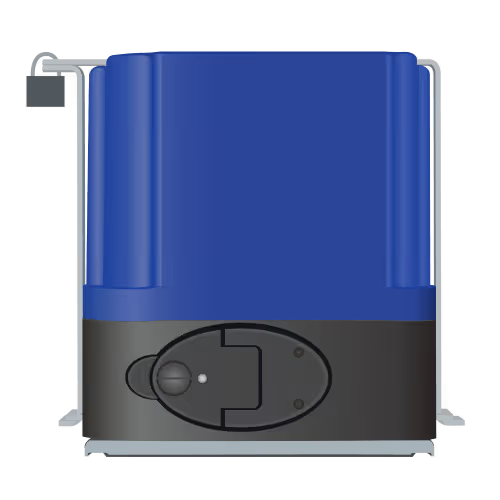
Most residential sliding gate motors run on a 12V 7Ah or 8Ah sealed lead-acid battery, which keeps the gate working when the power is off. A lead-acid gate motor battery usually lasts one to three years, and less if your area has frequent power cuts. A gate that slows down, stops halfway or won't open during an outage is the usual sign that it's time to replace it. If the power goes off often where you live, replace it with a lithium (LiFePO4) battery, which copes with repeated power cuts much better.
How long gate motor batteries last, and why
The mains power in a gate motor mostly keeps the battery charged; the battery does the actual work. How long it lasts depends on:
- Power cuts. Each outage drains the battery, and deep discharges wear a lead-acid battery out quickly.
- How often the gate opens. A busy household or a shared driveway uses far more charge than one car.
- Heat. Gate motors sit in the sun, and high temperatures shorten battery life.
- The charger. A faulty charger can kill a new battery within weeks.
- The gate itself. A heavy gate or a sticky track makes the motor work harder on every cycle.
Signs your gate motor battery is failing
- The gate opens more slowly than it used to.
- It stops halfway, or reverses for no clear reason.
- It works with mains power but not during a power cut.
- The motor beeps or shows a low-battery light (check your motor's manual for what each signal means).
- The battery case is swollen, cracked or leaking. Replace it straight away.
A multimeter gives a quick check: a healthy, fully charged 12V lead-acid battery reads about 12.6V with the charger disconnected. A noticeably lower reading after a full charge suggests the battery is worn.
Power cuts, loadshedding and battery cycles
Every time the power goes off, the gate runs on the battery until the power returns. When outages are frequent, the battery barely recovers before the next one, which is why so many South African homes needed new gate batteries during loadshedding.
Our recommendation: fit a lithium battery. Lithium iron phosphate (LiFePO4) batteries are made as drop-in replacements for the standard 12V 7Ah gate battery. They're built for repeated charging and discharging, are commonly rated for 2,000 cycles or more, and are usually sold with an expected life of five years or more. They cost more up front, but if your power goes off often, you'll replace them far less often.
Before you switch, check with your installer or the gate motor's manufacturer that your motor's charger suits lithium, and choose a battery with a built-in battery management system (BMS).
Replacing the battery: what to check
- Match the voltage and size. Most sliding gates use one 12V battery. Some swing gates use two batteries, wired for 24V or for more capacity.
- Match or exceed the capacity. A higher Ah rating gives more openings per charge, if it fits in the motor housing.
- Check the charger. If the last battery died early, have the charger tested so it doesn't kill the new one.
- Check the gate. Clean the track and wheels so the motor isn't working harder than it needs to.
- Recycle the old battery. Most battery retailers take old lead-acid batteries back.
A replacement battery is one of the cheaper gate repairs, so it's usually the first thing to rule out when a gate misbehaves.
Stay in control of your gate
A weak battery often shows up when you're already in the driveway. With Olarm connected to your gate motor, you can open the gate from the Olarm APP instead of a remote, and set a scheduled reminder in the app to check the battery every few months.
Depending on your gate motor and Olarm communicator, Olarm can also alert you when the gate motor loses mains power (AC fail), so you know it's running on its battery before the battery runs flat, and show whether the gate is open or closed. Olarm MAX also warns you when it loses power itself: a small built-in supercapacitor keeps it running for about two minutes, long enough to get that last warning to your phone. Don't ignore it: a sudden loss of power can also mean someone has cut the power to your gate on purpose or is tampering with it.
Olarm MAX connects your existing alarm and gate to the app over 4G and WiFi, so it stays connected even when a power cut takes your router offline. If you're choosing a new system, Olarm ONE is a wireless alarm with gate control through Olarm HUB. Lost a remote as well? Read what to do when you lose a gate remote.
Installer? Learn to connect gate motors to the Olarm APP with the free Olarm MAX Course and Olarm LINK Installation Course on Olarm Academy.
Frequently asked questions
How many times will a full battery open my gate?
It depends on the motor, the weight of the gate and the battery's age and capacity. Your gate motor's manual gives the expected number of cycles on battery power.
Can I fit a bigger battery?
Often, yes, if it has the same voltage and fits the housing. A higher Ah rating gives more openings during a power cut.
Are lithium gate motor batteries worth it?
Yes, if your area has frequent power cuts. A lithium (LiFePO4) battery costs more up front, but it handles repeated outages much better and usually lasts several years longer. Check that your gate motor's charger suits lithium first.
Why does my gate open slowly?
A worn battery is the most common cause. A dirty track, worn wheels or a faulty charger can cause it too.
Want to open your gate from your phone? See how Olarm MAX works with your gate motor.
Recent news
Why does my alarm app say offline? A home checklist
Wireless vs wired alarm systems: which suits your home?