















Choosing a detector: security beams, PIRs and door contacts

Security beams guard outdoor spaces such as boundaries and driveways, PIR detectors pick up movement in an area, and door and window contacts tell you the moment something opens. Most homes need a mix: beams or outdoor PIRs for early warning, PIRs inside, and contacts on the doors and windows people actually use.
Beams vs detectors: what's the difference?
Both raise the alarm when someone moves where they shouldn't, but they work in different ways.
- A security beam is a tripwire. It's two units facing each other, one sending an invisible infrared beam and the other receiving it. It watches a single straight line, and only triggers when something breaks that line.
- A detector watches an area. A PIR detector is one unit on a wall or in a corner, covering a fan-shaped zone in front of it, like a room, a passage or a stretch of garden. It triggers when it senses a warm body moving anywhere in that zone.
So beams suit boundaries and driveways, where you want to know the moment someone crosses a line. Detectors suit rooms and open spaces, where someone could come from any direction.
Security beams: how they work and where they fit
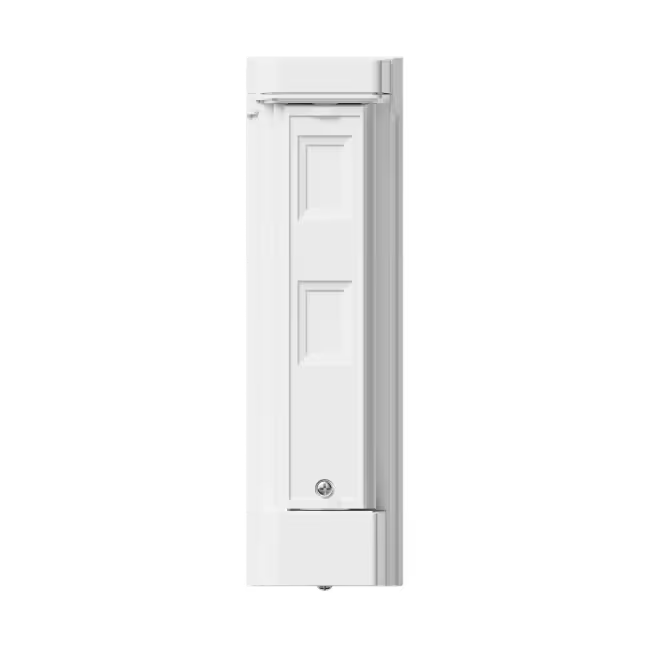
The transmitter sends one or more invisible infrared beams across to the receiver. When something blocks them, the alarm triggers.
- Where they fit: along boundary walls, across driveways and down the side of the house, where you want to know someone is on the property before they reach a door.
- Multiple beams: units with two or more beams usually need all of them broken at once, which helps ignore birds and small animals.
- Watch for: plants growing into the beam path, units knocked out of alignment, and low sun shining straight into a receiver.
What is a PIR detector and how does it work?
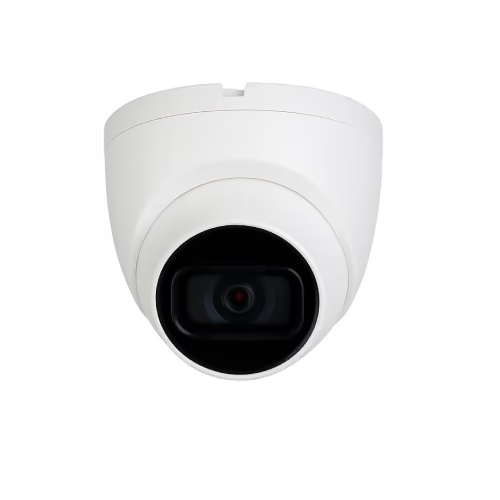
PIR stands for passive infrared. Everything warm gives off infrared energy, which we feel as heat, and people give off plenty of it. A PIR detector watches for that heat moving.
- Passive: it doesn't send out any beam or signal. It only receives the heat that's already there, which is why it uses so little battery.
- The lens: the patterned plastic window on the front splits the area into a fan of narrow zones, like fingers spreading out from the detector.
- The sensor: behind the lens, a heat sensor compares neighbouring zones. When a warm body moves from one zone into the next, the balance changes and the detector triggers.
Because it reacts to movement across those zones, a PIR is good at catching someone walking through a room. It's less sensitive to someone walking straight towards it, which is why placement matters. A dual-PIR detector uses two sensors that must both agree before it triggers, which helps cut false alarms from things like a sudden draught of warm air.
Indoor and outdoor PIRs
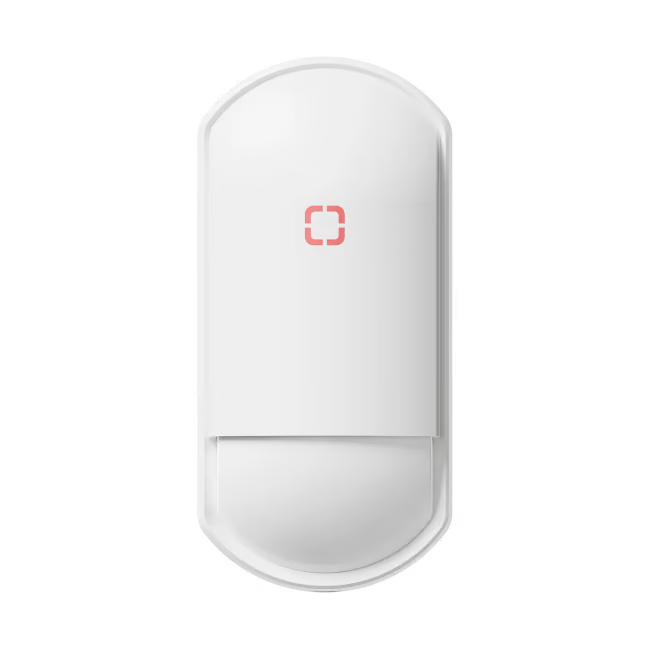
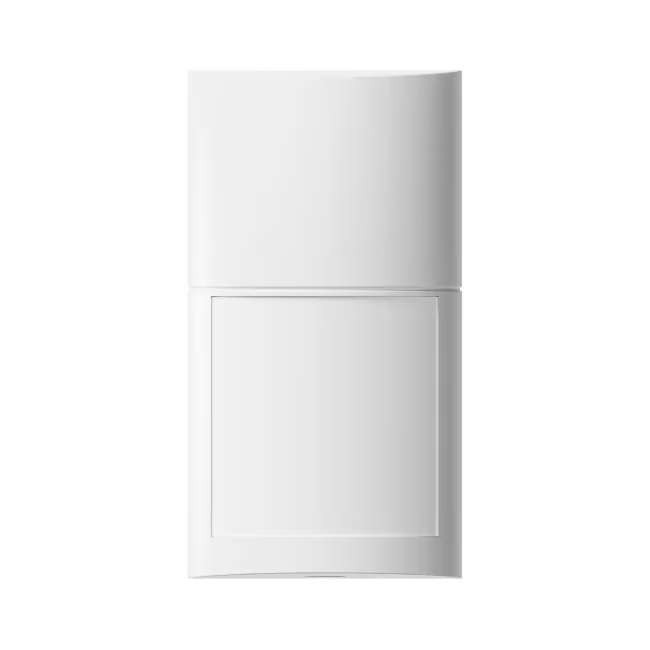
- Indoor PIRs cover rooms and passages. Olarm FlipX is a wireless dual-PIR indoor detector with pet tolerance and anti-masking, which warns you if someone tries to cover or block it.
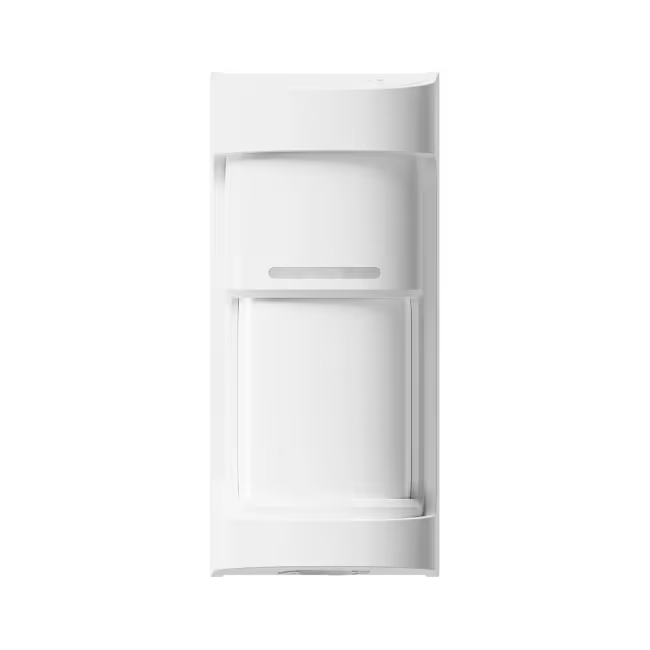
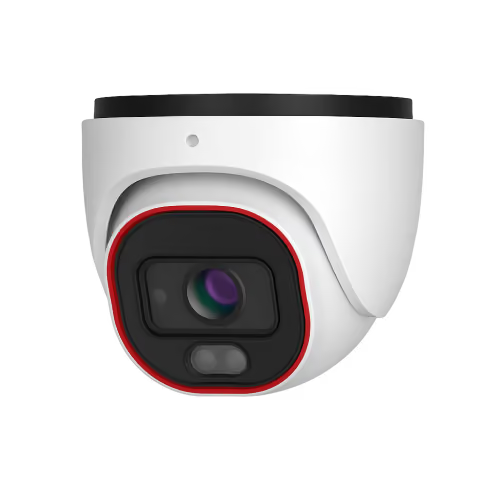
- Outdoor PIRs are built to handle sun, wind, rain and passing animals. They cover gardens and yards, often where running beams isn't practical. Olarm's OPTEX outdoor range includes Olarm 180X and Olarm 90XS.
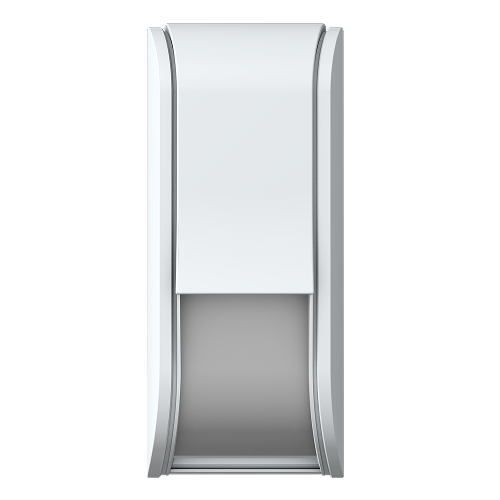
- Curtain detectors create a narrow wall of detection. Olarm CurtainX mounts up to 4m high outdoors and covers 12 metres, while Olarm WingX suits windows and corridors indoors.
When to choose microwave and when to choose anti-masking
Most homes are well served by PIRs. Two upgrades are worth knowing about for trickier spots.
Microwave (dual-technology) detectors send out a low-power microwave signal and measure the reflections, so they pick up movement whether or not it's warm. In alarm detectors they're almost always paired with a PIR, and both have to agree before the detector triggers. Choose one for:
- Hot spaces such as garages, roofs, storerooms and sunrooms, where on a hot day the room gets close to body temperature and a PIR struggles to tell a person from the background
- Rooms with heat sources, like heaters, aircons, fireplaces or windows in direct sun, that cause false alarms on a PIR alone
- Larger spaces like workshops and warehouses
Avoid them near thin walls, glass or doors with movement behind them, because microwaves can pass through and pick up activity on the other side. Fans and swaying curtains can also catch them out.
Anti-masking detectors notice when someone tries to blind them: covering the lens with tape or a bag, spraying it, or putting something in front of it. A would-be burglar might do this during the day while the alarm is off, so the detector sees nothing that night. With anti-masking, you get an alert instead. Choose it for:
- Businesses, shops and offices where members of the public walk past detectors during the day
- Homes with regular visitors, such as contractors, staff or Airbnb guests, who are inside while the alarm is disarmed
- Any area where a missed alarm would be costly, such as a safe room, stockroom or server room
Anti-masking is also a requirement for detectors in higher-security installations under EN 50131 Grade 3, the European intruder alarm standard. Olarm FlipX is a dual-PIR detector with anti-masking built in.
Door and window contacts
A contact is a magnet on the door or window and a sensor on the frame. When the two separate, the alarm knows that door is open. Contacts give you an instant, exact signal, which makes them good for entry doors, sliding doors and windows you leave open.
Olarm ENTRY is a wireless door and window contact with tamper detection, up to 2 years of battery life and up to 2km range through Olarm HALO.
Where to put detectors: check the site first
A detector and the area it watches work as a pair. The same detector can work well in one garden and cause nuisance alarms in the next, so walk the site with your installer first, then choose the detector that suits it.
Mounting height: get the tape measure out
Every detector's manual gives a mounting height. Measure it with a tape measure rather than judging by eye. A PIR's detection pattern spreads out like a torch beam, and the height decides where that beam lands. The slope of the ground matters too: on rising ground, mount the detector higher; on falling ground, mount it lower, staying within the manufacturer's recommended range.
- Too low: the pattern drops onto the ground close to the wall. A small animal fills more of each zone and can trigger it, and the range shrinks. A detector rated for 12m mounted too low may only reach about 8m.
- Too high: the pattern is pushed further out, so it watches the area near the house less well. That's often where your doors and windows are.
Pet tolerance depends on height too. A few centimetres feels like nothing on a ladder, but it can be the difference between a detector that ignores the dog and one that reports him to the neighbourhood.
Rising and falling ground
Ground that rises away from a detector makes a dog further out look bigger to it. Ground that falls away can make a person look smaller. Your installer can help with this by:
- Rising ground: mounting the detector higher, at the top of the recommended height range
- Falling ground: mounting the detector lower, at the bottom of the recommended height range
- shortening the detection range to where the slope, step or retaining wall begins, instead of leaving it on the maximum default
- taking extra care where pets roam on a slope, since an animal coming down a bank stays in view longer
Pools and water
Sunlight bouncing off a pool can strike the lens, and moving water shifts the heat pattern a PIR watches. Aim outdoor detectors so the pool and its reflections aren't in direct view. Where you need to cover the area around a pool, beams or a narrow curtain detector along the access path help keep the water out of the picture.
Fences, hedges and the boundary
Keep the detection pattern inside your property. A detector that looks through a palisade fence or over a low wall can pick up people walking past, the neighbour's dogs and passing cars. Hedges change too: one that blocks the view in summer can thin out in winter, and suddenly the detector is watching the street. Allow for plants growing, and keep the pattern clear of branches and long grass that move in the wind.
An electric fence is often the first layer of defence. Outdoor detectors are the next layer inside it, covering the garden and the paths to the house.
Pets, geckos and other false alarms
- Pet tolerance: pet-tolerant detectors ignore animals below a set weight when they're mounted at the right height. A cat on a couch, a counter or a set of steps is closer to human height and can still trigger one.
- Pet alleys: mounting a detector so your pet's usual route falls outside the detection pattern helps where pets follow a set path.
- Geckos: a gecko walking across a detector can set it off. Mounting the detector on a bracket that holds it away from the wall helps prevent this.
- Lights and spiders: an outside light attracts insects, insects attract spiders, and a web across the lens can trigger alarms. Mount detectors away from lights.
- Heat sources: don't point a PIR at heaters, aircons, fireplaces or windows that get direct sun.
Out of the intruder's reach
A detector at arm's height can be covered, sprayed or knocked off the wall before it sees anyone. Mounting outdoor detectors high, out of easy reach, makes this harder. Where a detector has to be mounted low for pet tolerance, position it so anyone approaching it has to walk through its pattern, or another detector's, first. Anti-masking detectors add a further layer by reporting when the lens is covered, and tamper switches report when the cover is opened.
Aim across the path
PIRs detect best when someone walks across the pattern rather than straight towards the detector. Mounting a detector on a side wall and angling it across a path or gate usually works better than pointing it straight down the path.
Walk test it
Once the detectors are up, walk through the area at different distances, angles and speeds, including the edges and any slopes. Check where detection starts and where it gets weak, then adjust the height, angle or range until it covers the area you want and not much else.
Wired or wireless detectors
Wired detectors run on cable to the alarm panel. Wireless detectors run on batteries and talk to the panel by radio, so they can go where running cable is difficult, such as a far boundary wall or a garden. Read our comparison of wireless and wired alarm systems to see which suits your home.
Olarm ONE is a wireless alarm system built around OPTEX detectors, with indoor, outdoor, curtain and door options that all connect to Olarm HUB.
Installer? Browse the free installer courses on Olarm Academy.
Frequently asked questions
What's the difference between a beam and a PIR detector?
A beam is a pair of units that watches one straight line and triggers when something crosses it. A PIR detector is a single unit that watches an area and triggers when it senses body heat moving through it.
Should I choose security beams or outdoor PIRs?
Beams suit straight lines such as walls and driveways. Outdoor PIRs suit open areas such as gardens. Many homes use both.
How high should I mount a PIR detector?
At the height in its manual, measured with a tape measure. On rising ground, mount it higher within the recommended range; on falling ground, mount it lower. Your installer can also shorten the detection range to where the slope begins.
Can pets set off a PIR detector?
Yes, if the detector isn't pet-tolerant or a pet climbs to human height. Choose pet-tolerant detectors and ask your installer to mount and set them for your animals.
Do wireless detectors need batteries?
Yes. Olarm ENTRY, for example, runs for up to 2 years on a battery. Replace batteries when the system warns you, and test detectors after changing them.
How many detectors does my home need?
It depends on the layout. Cover every way in, the main paths through the house, and outdoor areas where you want early warning. An installer can plan zones on a site visit.
Planning a new alarm? See the Olarm ONE detector range.
Recent news
Why does my alarm app say offline? A home checklist
Wireless vs wired alarm systems: which suits your home?