















Choosing a detector: PIRs, dual-tech, door contacts and outdoor detectors

PIR detectors pick up movement in a room, door and window contacts tell you the moment something opens, and outdoor detectors and beams give early warning in gardens and driveways. Most UK homes need PIRs in the main rooms and hallway, contacts on the front and back doors, and, for larger properties, outdoor detection before anyone reaches the house.
What is a PIR detector and how does it work?
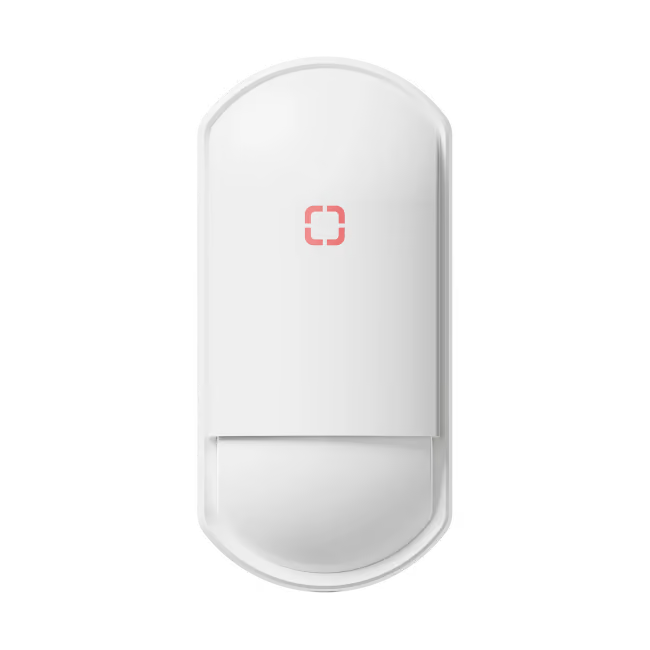
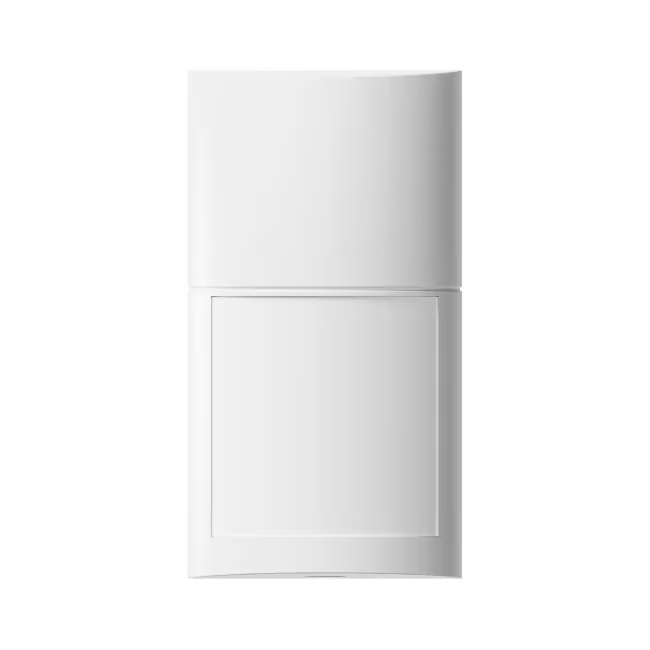
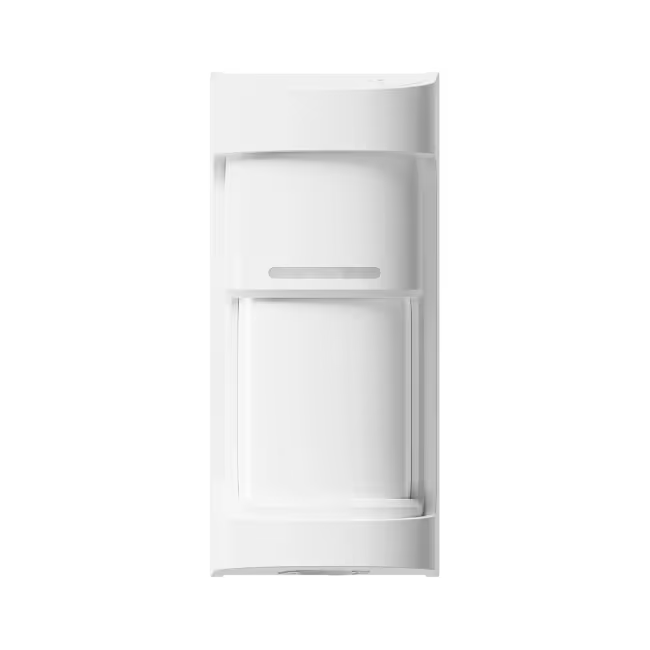
PIR stands for passive infrared. Everything warm gives off infrared energy, and people give off plenty of it. A PIR watches for that heat moving.
- Passive: it doesn't send out any signal. It only receives the heat that's already there, which is why wireless PIRs run so long on a battery.
- The lens: the patterned window on the front splits the room into a fan of narrow zones.
- The sensor: when a warm body moves from one zone into the next, the detector triggers.
A PIR catches someone walking across a room better than someone walking straight towards it, which is why placement matters. A dual-PIR uses two sensors that must both agree, which helps cut false alarms.
Dual-technology detectors
Dual-tech detectors pair a PIR with a low-power microwave sensor, and both must agree before they trigger. Choose one for conservatories, garages, lofts and rooms with heaters or strong sun, where a PIR alone struggles. Avoid pointing them at thin partition walls or glass, because microwaves can pass through and pick up movement on the other side.
Anti-masking detectors
Anti-masking detectors notice when someone tries to blind them by covering or spraying the lens, perhaps while the alarm is unset during the day. Choose them for shops, offices and homes with regular visitors. Anti-masking is also a requirement for detectors in Grade 3 systems under EN 50131, the European intruder alarm standard used in the UK. Most homes are installed to Grade 2, so check what your insurer asks for.
Door and window contacts
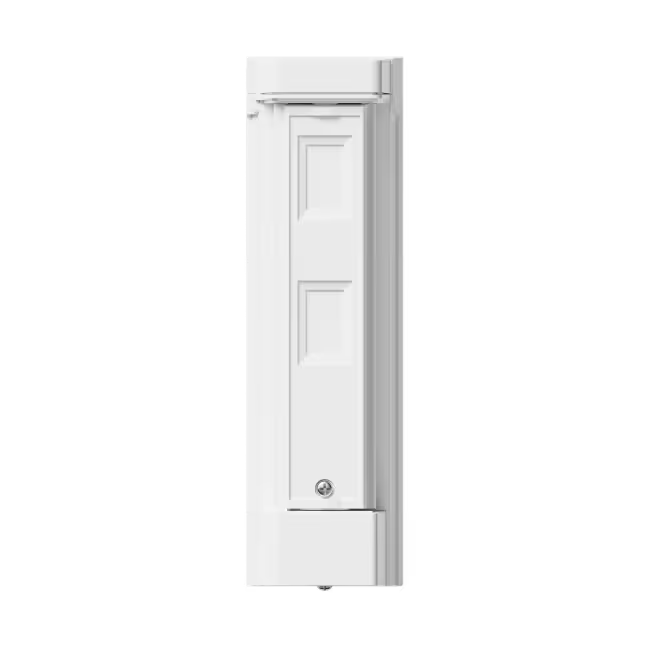
A contact is a magnet on the door or window and a sensor on the frame. When the two separate, the alarm knows that door is open. Contacts give an instant, exact signal, which suits front and back doors, patio doors and windows you leave open.
Outdoor detectors and beams
- Outdoor PIRs cover gardens, driveways and yards and are built for rain, wind and passing animals.
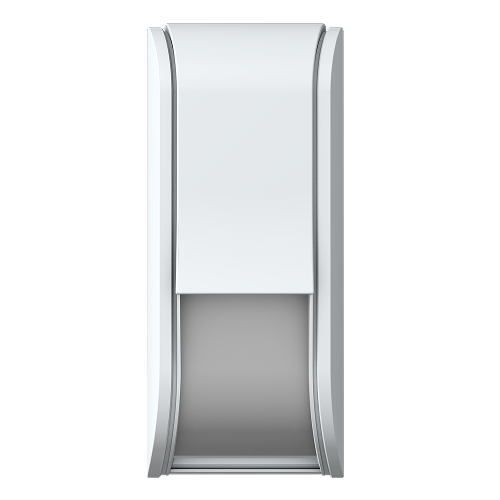
- Curtain detectors create a narrow wall of detection along a wall, window or side passage.
- Beams watch a straight line between two units, such as across a driveway or along a boundary on a large property or farmyard.
Where to put detectors
Mounting height
Every detector's manual gives a mounting height. Measure it rather than judging by eye. Too low and a pet fills more of the pattern and the range shrinks. Too high and it watches the area near the walls less well.
Pets
Pet-tolerant detectors ignore animals below a set weight when they're mounted at the right height. A cat on the stairs, a sofa back or a kitchen worktop is closer to human height and can still trigger one, so tell your engineer where your pets go.
Heat, draughts and insects
- Don't point a PIR at radiators, heaters, fires or windows that get direct sun.
- Keep detectors away from air vents and draughty doors that blow warm air across the lens.
- Spiders love the corner a detector sits in, and a web across the lens can cause false alarms in autumn. Clean detectors at the annual service.
Aim across the path
PIRs detect best when someone walks across the pattern. Mount a detector in a corner and angle it across the hallway or room, not straight down it.
Walk test it
Once the detectors are up, walk through the area at different distances, angles and speeds, and adjust until it covers what you want and not much else.
Wired or wireless detectors
Wired detectors run on cable to the panel. Wireless detectors run on batteries and talk to the panel by radio, so they can go where cable is hard to run, such as a garage, garden room or far wall. Read our comparison of wireless and wired alarm systems. Olarm ONE, Olarm's wireless alarm system with its own range of detectors, launches in the UK in 2027.
Frequently asked questions
How many detectors does my home need?
Cover every way in, the hallway and landing that intruders have to cross, and any outbuildings you want protected. An alarm engineer can plan the zones on a site visit.
Can pets set off a PIR detector?
Yes, if it isn't pet-tolerant or a pet climbs to human height. Choose pet-tolerant detectors and tell your engineer where your pets go.
What security grade do I need?
Most homes are Grade 2 under EN 50131. Higher-risk homes and many businesses need Grade 3. Your insurer may specify a grade.
Do wireless detectors need batteries?
Yes. Most last a few years, depending on the detector and how often it triggers. Replace batteries when the system warns you.
Already have an alarm? See how Olarm MAX puts it in an app.
Recent news

Orisec CP and ZP: app control and remote UDL with Olarm MAX

Texecom Premier and Premier Elite: app control and remote Wintex with Olarm MAX
